
Node.js backend development services
Node.js backend development services for your web app
Behind every sign-in and every payment on your site sits a server you never see, and that server is the part I build.
- Data model and a documented REST API on Express
- Logins, sessions and two roles: admin and customer
- Stripe checkout, invoices and webhook handling
- Transactional emails sent through a queue
- Deployment with monitoring, backups and a runbook
- A period after launch when any bug is mine to fix
Try it
Send a request. Watch where it goes.
Every click on a site becomes one of these: a request hits an API route, gets checked, touches the database and comes back with a status code. Pick one and follow it through — this is the work behind the button.
- 01Browser
- 02API route
- 03Auth
- 04Database
server.log
— pick a request —
A shape, not a benchmark. The same path runs on Next.js route handlers (on Node) and on Express; the database here is MongoDB — or whatever you already run.
Overview
Inside Node.js backend development services
When a customer signs up or pays on your site, the code doing the work runs on a server they never see. Node.js backend development services build that code and the database behind it. I build it on Node and Express with MongoDB.
I design the API and the data model together, so the endpoints and the collections are planned side by side.
- REST API development on Express, with validation, rate limits and documentation
- Logins, sessions and roles, such as admin and customer
- Stripe payments: checkout, invoices, refunds and webhooks
- Background jobs on BullMQ and Redis for emails, reports and imports
- Custom API integration with your CRM, ERP, booking or payment system
- Deployment on AWS, a VPS or the host you already use, with monitoring and a runbook
What a scope from me looks like
Phase one, kept deliberately short
Included
- Data model and a documented REST API on Express
- Logins, sessions and two roles: admin and customer
- Stripe checkout, invoices and webhook handling
- Transactional emails sent through a queue
- Deployment with monitoring, backups and a runbook
- A period after launch when any bug is mine to fix
Phase two
- A third role with its own portal
- Sync with a CRM or ERP
- Reports and exports
Not doing
- Native mobile apps
- Cleaning or re-keying messy data by hand
Phase one carries only what the product can't open without. Anything that can wait, like a third role or a CRM sync, goes under phase two.
What you get
Back-end work inside Next.js, Express, WordPress and Laravel
If it runs on a server and holds your data, it's back-end work, whatever framework it sits in. A Next.js site runs on Node, and its route handlers are an API like any other. A custom WordPress plugin is PHP talking to a database.
- Next.js on Node: route handlers, server components, middleware and auth, with the pages and the API in one codebase
- Express and Node APIs for accounts, orders, payments, webhooks and queues
- Custom WordPress themes and plugins: PHP, custom post types, REST endpoints and WooCommerce hooks
- Laravel backend development on PHP and MySQL, with Eloquent models and Laravel's own queues
- Databases: MongoDB by default, MySQL under WordPress and Laravel
- Integrations with Stripe, email, CRMs and shipping, with retries and logs
Process
Building it: access first, then code
On a back-end build, most of what you supply is access to accounts that already exist. When a build stalls, it's usually waiting on a login rather than on code.
- 1
$ run step-01 --discovery-call
Discovery call
› What the product does, who logs in, and what it has to connect to.
? input Walk me through the flows, the roles and the systems involved.
✓ A first list of roles and connected systems
- 2
$ run step-02 --strategy-and-wireframes
Strategy & Wireframes
› The flows become a data model, a list of endpoints and a table of who can do what. That is the written scope, and it is settled before any screen is drawn.
? input Give access to the current database, hosting, payment and CRM accounts, and comment on the model.
✓ A data model, an endpoint list and a scope you sign off
- 3
$ run step-03 --design-and-develop
Design & Develop
› I build the API endpoint by endpoint on a staging server with test data, so the front-end can start against it early. Each endpoint gets its tests as it's written.
? input Supply API keys, sample data and any edge cases you already know about.
✓ A staging API with its documentation, updated as I go
- 4
$ run step-04 --review-and-revisions
Review & Revisions
› You run every flow on staging from start to finish, the way a customer would. I fix what breaks, add a test for it and run the whole set again.
? input Note anything a customer would trip over.
✓ A revision log and a test run that passes
- 5
$ run step-05 --launch-and-handover
Launch & Handover
› Production gets monitoring, backups and alerts. Secrets are rotated. The code repository, its environment settings and the runbook pass to you.
? input Join the launch call and approve the release.
✓ The live API, repository access, the runbook, and launch bugs handled by me
- 6
$ run step-06 --seo-and-support --watch
SEO & Support
› Packages get security updates, and a live API needs someone watching its error logs. New endpoints get added as the product grows, each with its own tests.
? input Say who should get the error alerts.
✓ Updates applied, alerts watched, and new endpoints when you need them
- Discovery callboth
- Strategy & Wireframes
- Design & Develop
- Review & Revisions
- Launch & Handoverboth
- SEO & Support
Tech stack
REST API development on Node, Express and MongoDB
The defaults are Node, Express and MongoDB. The other rows change only when your product needs them.
| CRITERION | What I use | Why |
|---|---|---|
| Runtime | Node | One language across the front-end and the back-end |
| API | Express, or Next.js route handlers | Small, well known, and easy for the next developer to read |
| PHP option | Laravel | Queues, Eloquent and migrations come built in |
| Database | MongoDB with Mongoose | Documents suit orders, content and events |
| Auth | Sessions, with roles | Each role sees only what it's allowed to, on one codebase |
| Payments | Stripe | Checkout, invoices, refunds and webhooks |
| Jobs | BullMQ on Redis | Emails, reports and imports run outside the request |
| Hosting | AWS, a VPS, or the host you already use | Your team's choice, or my recommendation if you don't have one |

Why it matters
After the click: refunds, retries and webhooks
Creating an order is the simple part of a back-end. The harder part is everything that happens after it. A payment can succeed after the customer has closed the tab. A refund can come long after the order. An email has to go out exactly once. When I build that part, payments and invoices go through Stripe, and emails go through a queue on Redis.
The queue goes in with the first version. If email is sent inside the checkout request, a slow mail server makes the customer wait at checkout. Adding it later is costly. It means reworking code that is already live.
What the research says
Why shoppers say they left a checkout
Baymard Institute gathers the reasons shoppers give for abandoning a cart. Several of them are about the site itself rather than the price.
70.22% of online shopping carts are abandoned (average of 50 studies); these are the top reasons shoppers give.
- Extra costs too high (shipping, tax, fees)40%
- Delivery was too slow20%
- I didn't trust the site with my credit card information19%
- The site wanted me to create an account18%
- Too long / complicated checkout process17%
- Website had errors / crashed17%
These figures are other people’s research, quoted as published. Your own site’s numbers come from the free checks and the audit.
One payment, one charge
A webhook that arrives twice should never charge a customer twice. That test runs first.
Case study
Eve Tech: an architecture review on Next.js
Eve Tech is a product catalogue from South Africa, built on Next.js. The job on record, from 2024, was to analyse the project's architecture, find the glitches and give advisory support across the front-end and the back-end.
More builds are on the projects page.
Client feedback
Two clients on the software side
- ★★★★★
“Sandipan is a great software developer to work with. He understands the requirements very well and his work is of very high quality… We are very lucky we found him and wish to continue working with him.”
- ★★★★★
“The freelancer demonstrated excellent problem-solving abilities, tackling challenges head-on and coming up with innovative solutions, maintains clear, concise, and prompt communication.”
The awkward cases
A payment that goes wrong still leaves one clean order
A customer pays and closes the tab before the page reloads. Stripe still sends its confirmation, sometimes twice. The server records one paid order, not two. That case is tested before launch, and so are refunds.
Each endpoint is written up, so whoever works on it next can see what it expects and what it sends back.
- 900+ projects
- since 2017
- 4.9★
- 400+ five-star reviews on Fiverr
- 9+ years
- building WordPress and Next.js sites
Support is the whole team, not one person — reach us any time, and someone picks it up.
“The freelancer demonstrated excellent problem-solving abilities, tackling challenges head-on and coming up with innovative solutions, maintains clear, concise, and prompt communication. Any questions or concerns I had were addressed quickly and professionally.”
Schedule a Meeting
Bring the flows you've sketched, even rough ones. I'll tell you on the call what the first version of the back-end would cover.
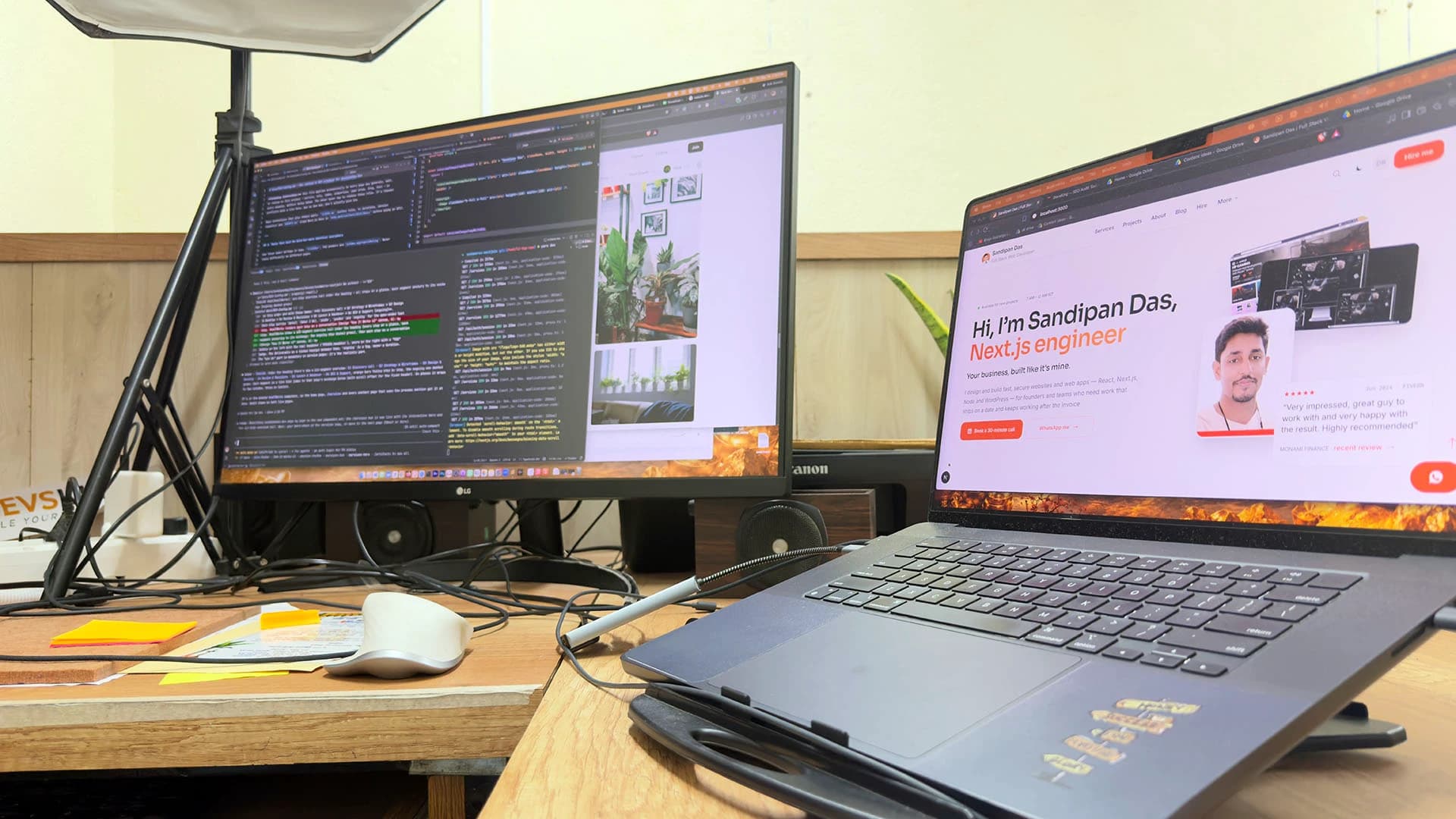

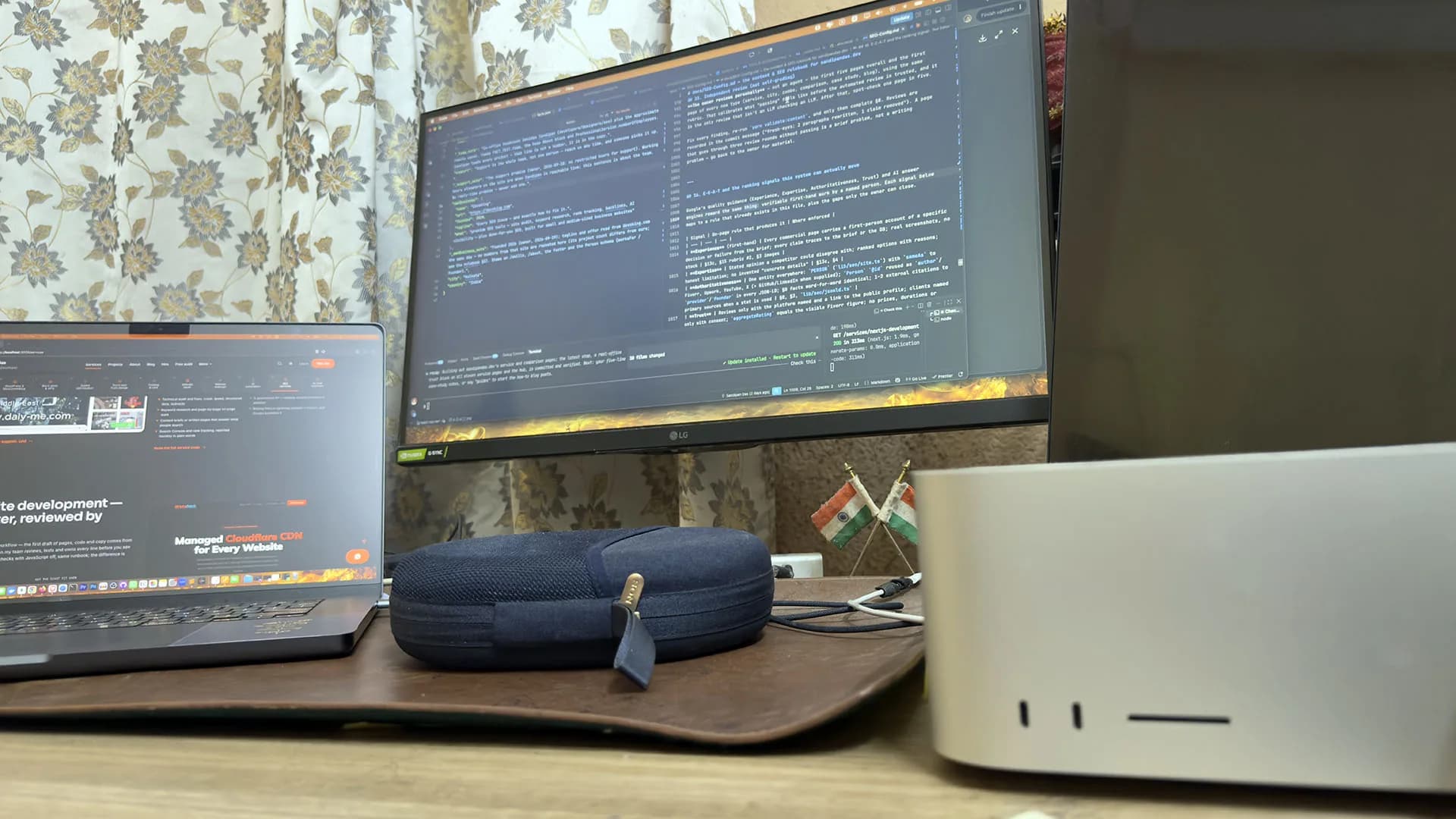
A real office, real people
Led by me, built with my team — in Kolkata, India.
The team: three developers, a designer and three SEO specialists in the Kolkata, India office, plus around six people working remotely. When the back-end is finished, it comes to you documented, deployed and with the keys.

Sandipan Das
You talk to me; I’m the one accountable for the work.
- Availability
- The team works on your schedule, in your time zone.
- Support
- Support is the whole team, not one person — reach us any time, and someone picks it up.
Pricing
Endpoints become quote lines
The quote is the endpoint list, with a price beside each line. Roles, integrations and deployment are lines of their own. If you cut the CRM sync from phase one, the total drops by exactly that line. The quote is written before work starts, and phase two is priced once phase one is live.
"Just connect it to our CRM" sounds like one line in a scope. Once that CRM's rate limits and half-filled records show up, it turns into several. So I read the other system's API before I price that line.
If your product already has a back-end team and only needs screens built, front-end from your design is the better fit.
Next step
Send the roles and the systems
Tell me who logs in, what they do, and which systems your product has to talk to. Those become the data model, the endpoint list and the written scope.
Should my back-end be Node or Laravel?
- Node is my usual pick when the front-end is React or Next.js and one language across the stack matters, or when there is no team yet and simple hosting counts. Laravel is the pick when your team already runs PHP and knows Eloquent and its queues. Both handle accounts, payments and integrations well. What decides it is who maintains the back-end after me.
Can you connect it to the CRM and payment provider we already use?
- Yes, and each connection is scoped as its own line. That line says what syncs and in which direction. It also says what happens on a conflict and what limits the other system has. An existing database stays where it is when that's safe, and any migration is rehearsed on a copy first.
Will I own the code and the servers?
- Yes, all of it. The hosting, database and Stripe accounts are opened in your name at the first deployment. At launch you receive the repository, the deployment settings and the runbook.
What do we get at handover — documentation, tests, a runbook?
- Every endpoint is documented, and the critical flows have tests, both kept in the repository. The runbook covers deployment, backups, secrets and the parts most likely to break. A developer who has never seen the code should be able to deploy a fix from it.
Can you build the back-end for our React app, or only the API?
- Either. If you want both from one team, I build the front-end and the back-end together. If you already have front-end developers, I build the API to a contract we agree first, with a staging server they can code against early.
Published · Updated