
Next.js development services
Next.js development services for sites that do more than show pages
Next.js suits a site that has work to do behind the pages, like a client area or a dashboard, and still needs public pages that load fast.
- Marketing pages on the App Router
- Homepage design first, from your Figma or a reference site
- Contact and quote forms to your inbox, and to a CRM if you use one
- A CMS for the blog and any page that changes
- Deployment to Vercel or a server you own, with DNS, analytics, sitemaps and structured data
- A runbook, and fixes after launch
Try it
Write it, build it, ship it — and see the green.
A server-rendered page from code to deploy. The editor writes, the terminal builds, the preview renders on the server, and the last line is the one you care about.
▍Illustration of a Next.js build, not a benchmark. The real numbers for your site come from the speed check and the build log I hand over.
Overview
Next.js development services: what a build includes
My Next.js development services cover the whole build of a React site or web app, from the written scope to the handover. Marketing sites, dashboards and client portals are the usual jobs.
I build on Next.js and React, with MongoDB when there's data to store. What gets built around that depends on the job.
- Homepage design first, from your Figma or a reference site
- A CMS when the content changes often
- Accounts, roles and dashboards
- An API, and connections to your CRM or payment account
- Deployment, DNS, analytics, sitemaps and structured data
What a scope from me looks like
Phase one, phase two, and what's left out
Included
- Marketing pages on the App Router
- Homepage design first, from your Figma or a reference site
- Contact and quote forms to your inbox, and to a CRM if you use one
- A CMS for the blog and any page that changes
- Deployment to Vercel or a server you own, with DNS, analytics, sitemaps and structured data
- A runbook, and fixes after launch
Phase two
- Client login with order history
- Admin dashboard
- Stripe checkout and invoices
- Logo and brand design — quoted separately
- Copywriting — quoted separately
Not doing
- Native mobile apps
Here's how a first scope looks for a Next.js site with a client area. Phase one is the public site. Phase two is the logged-in part.
If there's no design and nobody owning the content at the start, the homepage-first design step comes first.
Process
Six steps from discovery to a live Next.js site
Each step has two sides, my work and what I need from you.
- 01
Discovery call
I doWe go through the job the site or app has to do, who signs in, and what it connects to.You doBring the goal, the audience, and the systems it must connect to.You get: Which stack fits, and what the quote will cover - 02
Strategy & Wireframes
I doI map every route, role and integration into a written scope with simple wireframes. The data model comes out of this step.You doGive access to the current site, database, hosting and analytics, and comment on the wireframes.You get: A signed-off scope, wireframes and data model - 03
Design & Develop
I doThe homepage design comes first. Then the build goes up on a preview link that refreshes with every push, so you see each page as it's made.You doApprove the homepage, then send copy, images, logins and API keys when they're needed.You get: A preview link that stays current - 04
Review & Revisions
I doYou check each page of the preview, signed in and signed out. I fix what breaks, check again on real devices, and rerun the audits.You doSign in as each kind of user and note what's wrong.You get: A fix for each note, checked on real devices - 05
Launch & Handover
I doAt launch, everything set up on the preview goes live with the new site, including redirects from any old addresses. You're on the call when DNS is switched over.You doStay on the call while it goes live, then sign off.You get: The live site, repository access and the runbook - 06 · ongoing
SEO & Support
I doAfter launch the packages need updating and Search Console needs watching, and there's usually a next feature. My team can carry that on, or your developers pick it up from the repository.You doDecide who owns the updates after launch.You get: Monthly reports from my team, or a clean handover

- Discovery callboth
- Strategy & Wireframes
- Design & Develop
- Review & Revisions
- Launch & Handoverboth
- SEO & Support
Tech stack
What I build Next.js sites with
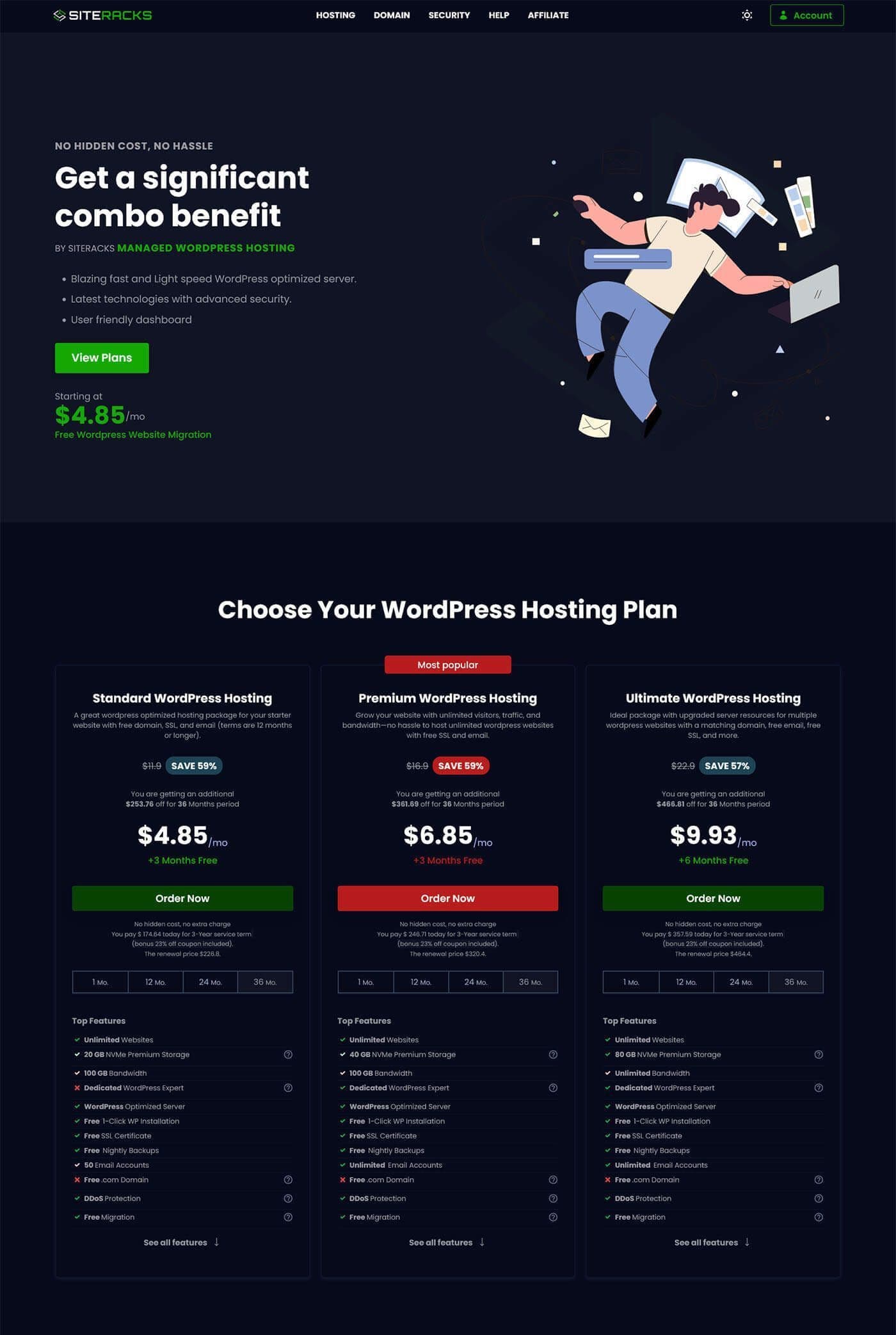
SiteRacks and Eve Tech are both built on Next.js and React. MongoDB holds the SiteRacks plans and accounts. Hosting is your choice, and I've deployed to Vercel, AWS and plain Node servers.
- Next.js (App Router)
- React
- MongoDB
- Vercel
- AWS
- or Node on your own server
Why it matters
Server rendering on every public route
A React app that renders only in the browser sends Google a nearly empty page, and the content arrives once the JavaScript runs. Google does run it, but rendering happens in a later pass, so indexing is slower and easier to get wrong. With server rendering, the finished HTML goes out on the first request.
On every build I also keep public routes free of loading states. It makes the code a little less convenient to write. I accept that, because a business site's first job is to be found and read.
The metadata, the sitemap and the structured data are written with the first route.
What the research says
How load time changes what mobile visitors do
Google measured real mobile visits, and Deloitte measured what a tenth of a second was worth across 37 brand sites. The green band is the load time Google calls good.
At 3.0 s a mobile visitor is +32% more likely to leave than at 1 s, as Google published it. Measure your page →
The rise after mobile pages got 0.1 seconds faster.
- Retail conversion rate8.4%
- Retail spend per order9.2%
- Travel conversion rate10.1%
These figures are other people’s research, quoted as published. Your own site’s numbers come from the free checks and the audit.
Changes, in writing
Every change request gets its own written line before it's built, so nothing on a later invoice comes as a surprise.

Case study
SiteRacks Hosting and Eve Tech
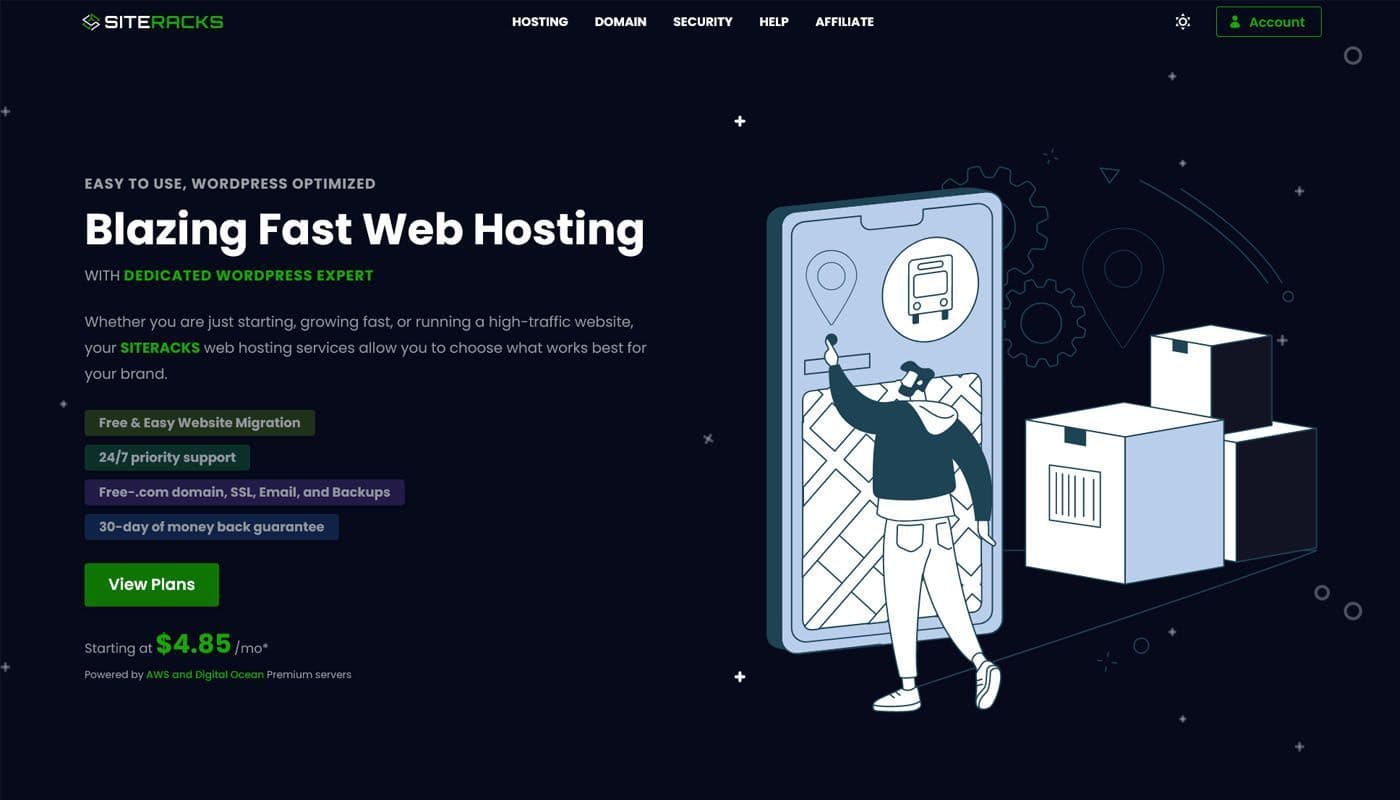
SiteRacks is a US hosting company. In 2024 I built their site. It runs on React and Next.js, and MongoDB and AWS sit behind it. They needed hosting plans, a client area and a fast marketing front. Feedback came back over Fiverr, WhatsApp and email, including this: "Sandi was brilliant, easy to talk, always responsive, and made fantastic work with our website."
Eve Tech is a product catalogue from South Africa, also built on Next.js.
Yours to run
Any Next.js developer can pick up where we stopped
The site runs on Vercel or on a server you control, whichever we chose in the scope. The code sits in a repository in your own account. When you want a new feature next year, a Next.js developer can open that repository and the runbook and see how the parts fit together.
- 900+ projects
- since 2017
- 4.9★
- 400+ five-star reviews on Fiverr
- 9+ years
- building WordPress and Next.js sites
Support is the whole team, not one person — reach us any time, and someone picks it up.
“The freelancer demonstrated excellent problem-solving abilities, tackling challenges head-on and coming up with innovative solutions, maintains clear, concise, and prompt communication. Any questions or concerns I had were addressed quickly and professionally.”
Schedule a Meeting
Bring the idea, and the parts of it that need logins or stored data, and we'll decide together whether Next.js is the right choice.
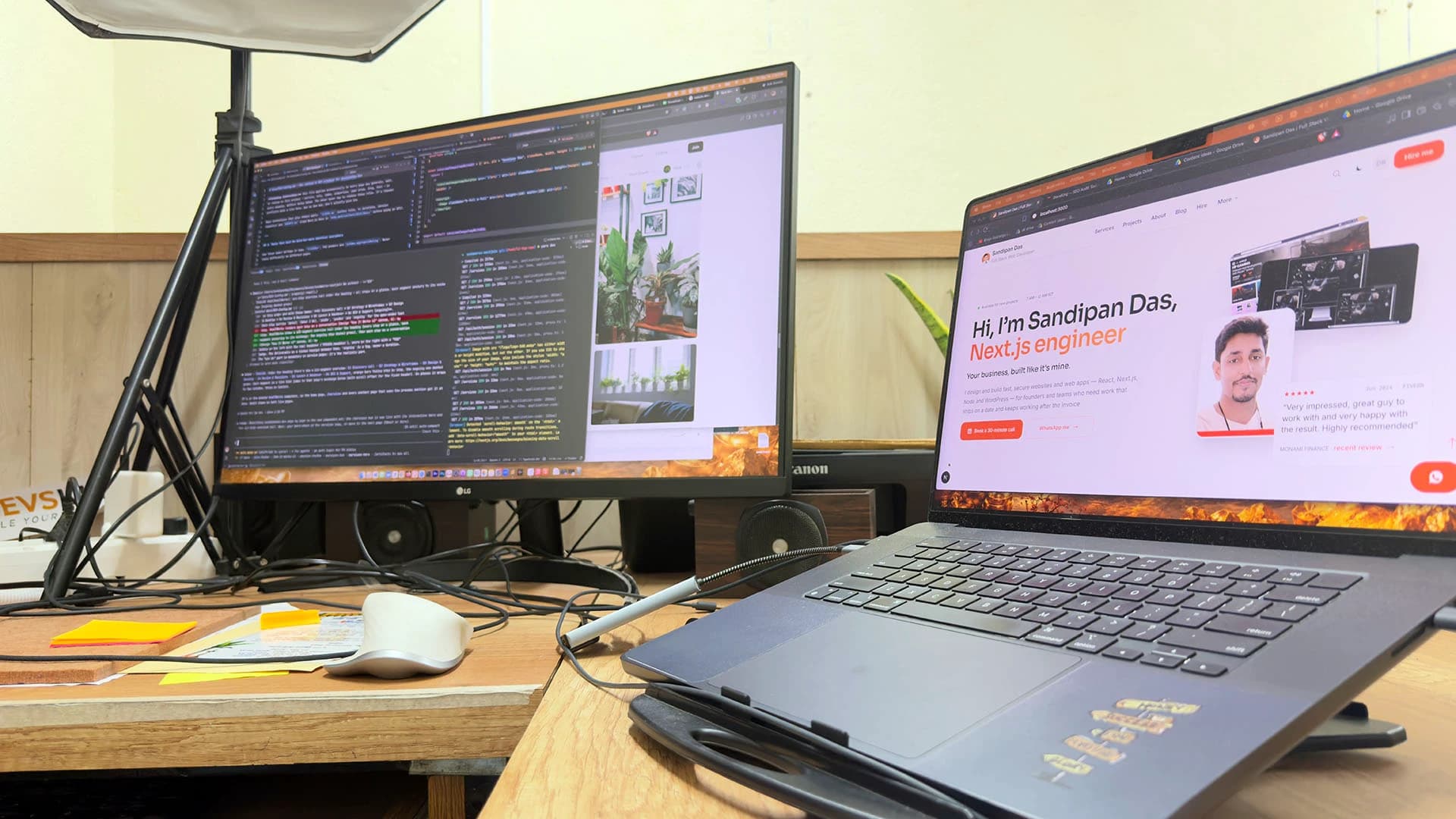

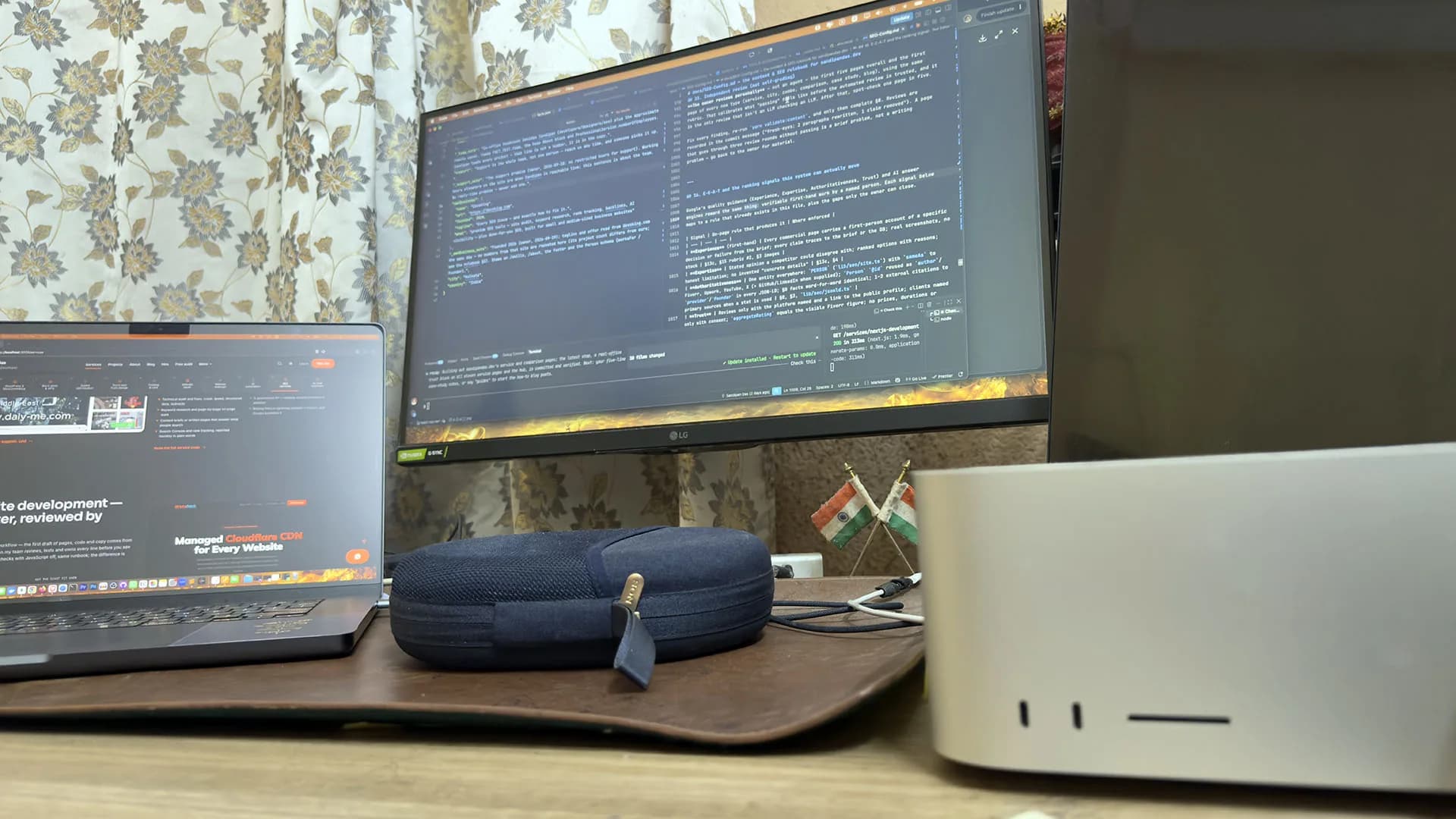
A real office, real people
Led by me, built with my team — in Kolkata, India.
The team: three developers, a designer and three SEO specialists in the Kolkata, India office, plus around six people working remotely. I lead every Next.js build and write it with the three developers on the team.

Sandipan Das
You talk to me; I’m the one accountable for the work.
- Availability
- The team works on your schedule, in your time zone.
- Support
- Support is the whole team, not one person — reach us any time, and someone picks it up.
Pricing
Quoting a Next.js build
The quote follows the scope. Pages, roles, integrations and deployment each get their own line, in writing, before work starts.
Integrations are where a build grows. A payment or CRM connection that sounds simple brings refunds, webhooks and the customer who changes their email address. I write that work into the scope at the start, so it isn't discovered halfway through.
Two related services sit close by. An AI-assisted build drafts the same Next.js pages faster, and AI automation is what goes inside the app.
Next step
What does your site need to do?
Book a call and describe the job. You get a written scope next, then a preview link.
Do I need Next.js, or is WordPress enough for my site?
- WordPress is enough for a set of pages, a blog and a simple shop. It costs less to run, and you can edit it yourself. Next.js for small business websites earns its place once people log in, use a dashboard, or the site has to talk to other systems. I'll tell you which one fits during the discovery call.
Can you deploy a Next.js site on my own server instead of Vercel?
- Yes. Any machine with Node will run a Next.js site, including a VPS, AWS, or your existing setup behind Nginx. Vercel is simpler when nobody on your side runs servers. Your own server makes sense when you already have one and someone to look after it.
Who maintains a Next.js site after launch?
- My team can, or your own developers can. On a retainer we keep the Next.js site's packages updated, watch its Search Console data, and build the next feature when you need it. Your developers would start from the repository and runbook handed over at launch. Somebody has to own the updates either way.
How is a Next.js site different from a plain React site?
- Plain React builds the page in the visitor's browser. Next.js builds it on the server and sends finished HTML, then adds the interactive parts on top. The components are the same, and the first load is faster.
Can you move my older Next.js or React site onto the App Router?
- Yes. The older site moves over route by route, old URLs are redirected, and each route is checked on the preview before it goes live. The App Router migration is scoped like a build, with the routes, the data and the redirects each on their own line.
Published · Updated