
AI website development
AI website development on WordPress or Next.js
AI models turn your own material into the first draft of your site, and a developer on my team takes it from there.
- Discovery call, then a written scope
- Design from your brand, your references or your Figma file, homepage first
- First drafts of the home, services, about, contact and blog pages, from your material
- A developer's line-by-line review, tested on real devices and with JavaScript off
- Contact forms, redirects, sitemap, metadata and structured data
- Deployment, the runbook, and launch bugs fixed
- 9+ years
- building for the web, since 2017
Try it
A draft from the models, a review by a person, then launch.
The models write the first draft of the page from your material. The red marks are what a developer caught on review. Once those are fixed, the page goes live.
review.log
— waiting for the draft —
The three marks are examples of the kind of mistake a model makes. Most of the developer's time on this service goes into that review.
Overview
AI website development with the usual plan of work
AI website development with my team follows the same plan of work as any other build of mine. What changes is how quickly the first draft of each page appears. Everything around that draft stays as it is.
- A written scope and page list, agreed with you on a call
- The homepage design approved before any other page
- Checks on real phones and with JavaScript switched off
- A launch call, and a runbook for editing the site yourself
What a scope from me looks like
A first scope for an AI-assisted marketing site
Included
- Discovery call, then a written scope
- Design from your brand, your references or your Figma file, homepage first
- First drafts of the home, services, about, contact and blog pages, from your material
- A developer's line-by-line review, tested on real devices and with JavaScript off
- Contact forms, redirects, sitemap, metadata and structured data
- Deployment, the runbook, and launch bugs fixed
Phase two
- A shop, a booking flow or a client login
- AI features inside the site, as a separate AI automation scope
- Logo and brand design — quoted separately
Not doing
- Photos, prices or reviews made up by a model
Every page in the scope gets its own line. Your scope lists your own pages, and the drafting and the testing sit inside the same lines. A page you add later becomes one more line.
Process
The six steps of an AI-assisted build
Your homepage approval in step three is the point every other page is drafted from.
- 01
Discovery call
What the site needs to achieve, who it is for, and which material already exists. We also talk about who will edit the site, which points to WordPress or Next.js.- You
- Bring the goal and a list of the material that exists.
- Get
- A list of the material still to gather
- 02
Strategy & Wireframes
My team writes the scope, the page list and the wireframes from the call. You sign them off before any drafting starts.- You
- Send the material: text, photos, prices, reviews and brand files.
- Get
- A signed-off scope and wireframes
- 03
Design & Develop
The homepage design gets your approval first. The other pages are then drafted and checked one by one on staging, on real devices and with JavaScript off. You can look in at any point.- You
- Approve the homepage, then read the drafted copy closely. It describes your business.
- Get
- A staging link that fills up as pages pass review
- 04
Review & Revisions
You check every page of the staging site on your own phone. The team fixes each point and checks it again.- You
- Mark anything that doesn't sound like you.
- Get
- A revision log, with each change marked done
- 05
Launch & Handover
We point the domain while we're both on a call. Redirects, the sitemap and analytics move across, and the runbook shows you what to edit.- You
- Be there for the launch call, then sign off.
- Get
- The live site, the runbook, and fixes for what turns up after launch
- 06ongoing
SEO & Support
A live site needs updates, backups and a monthly look at Search Console. The care plan covers that. New pages added later are drafted and checked the same way as the first ones.- You
- Decide whether the care plan should cover it.
- Get
- Updates, backups and a monthly report
- Discovery callboth
- Strategy & Wireframes
- Design & Develop
- Review & Revisions
- Launch & Handoverboth
- SEO & Supportboth
Tech stack
AI web development services on WordPress and Next.js
Your finished site has no model inside it. The models sit in my developers' tools, and what you receive is an ordinary WordPress or Next.js build.
| CRITERION | What the team uses | Why |
|---|---|---|
| Drafting | AI models inside the developers' tools | The first draft of pages, code and copy takes less time |
| Review | A developer, page by page, on real phones and laptops | Phones and laptops show layout problems that a desktop preview hides |
| Sites you edit | WordPress, built for Elementor or the block editor | You change the content yourself, and the runbook shows how |
| Applications | Next.js, React and MongoDB | Pages rendered on the server, with real logic behind them |
| Script-free check | Every page opened with JavaScript switched off | The words and the links have to be there without scripts running |

Why it matters
What a confident mistake looks like
The models are quick, and sometimes they are wrong in a confident voice. A model will happily write a paragraph about a service you don't offer, or a price you never charged. That paragraph would go out under your name.
I have every claim in a draft checked against the notes you sent. A sentence that can't be traced back to them is cut, or sent to you as a question.
Homepage first
The homepage is designed and approved before any other page is drafted. Every later page takes its type, spacing and tone from it.
Before you see a page
Your first preview has already been checked
The first preview already has your own photos, prices and wording in it. The mistakes the model made have been fixed, and the pages have been opened on real phones. The scope and the handover work the same way as on a site built by hand. The first draft simply took less time.
- 900+ projects
- since 2017
- 4.9★
- 400+ five-star reviews on Fiverr
- 9+ years
- building WordPress and Next.js sites
Support is the whole team, not one person — reach us any time, and someone picks it up.
“The freelancer demonstrated excellent problem-solving abilities, tackling challenges head-on and coming up with innovative solutions, maintains clear, concise, and prompt communication. Any questions or concerns I had were addressed quickly and professionally.”
Schedule a Meeting
Bring whatever material you have, and I'll walk you through how the first draft gets built from it.
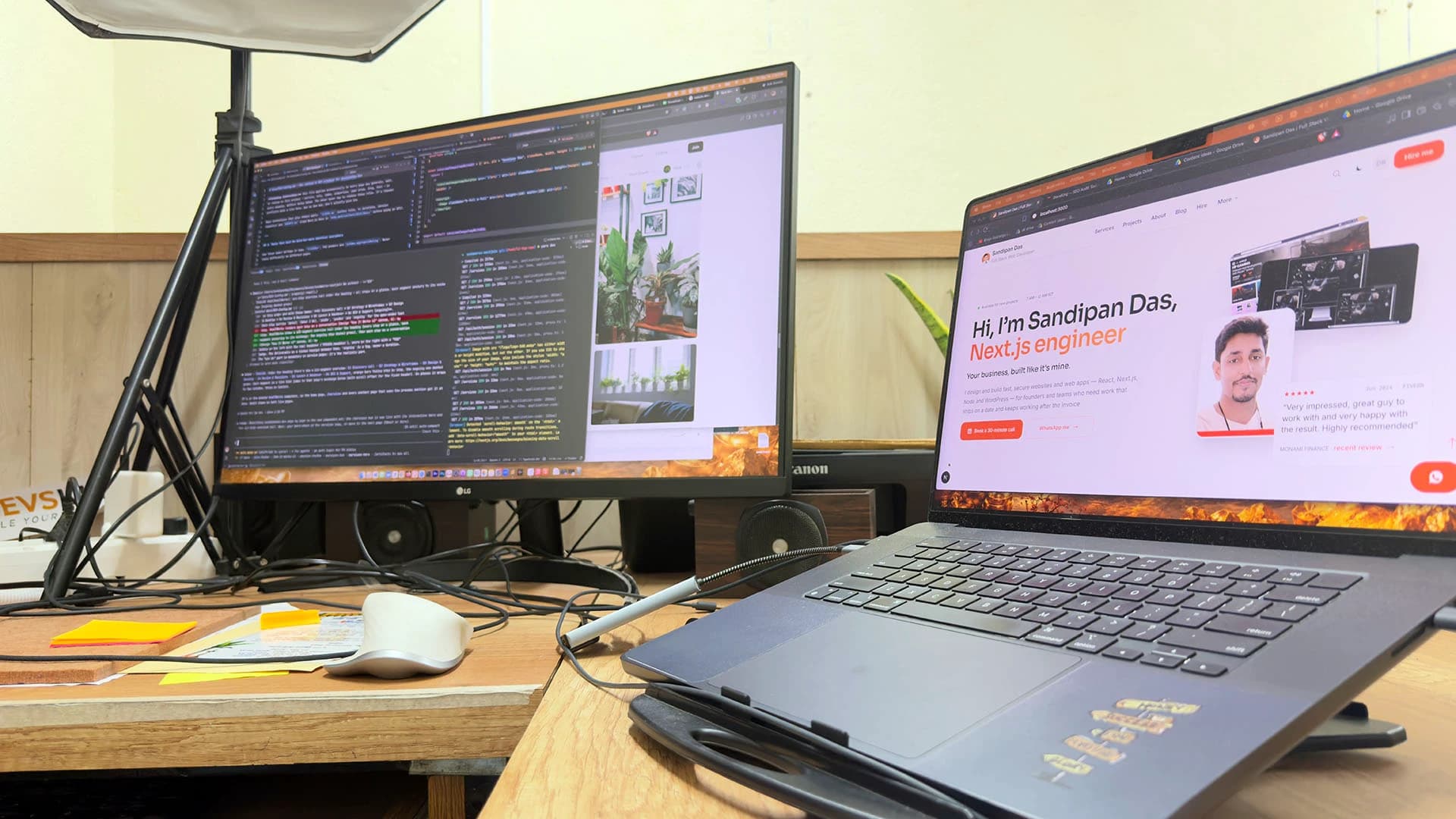

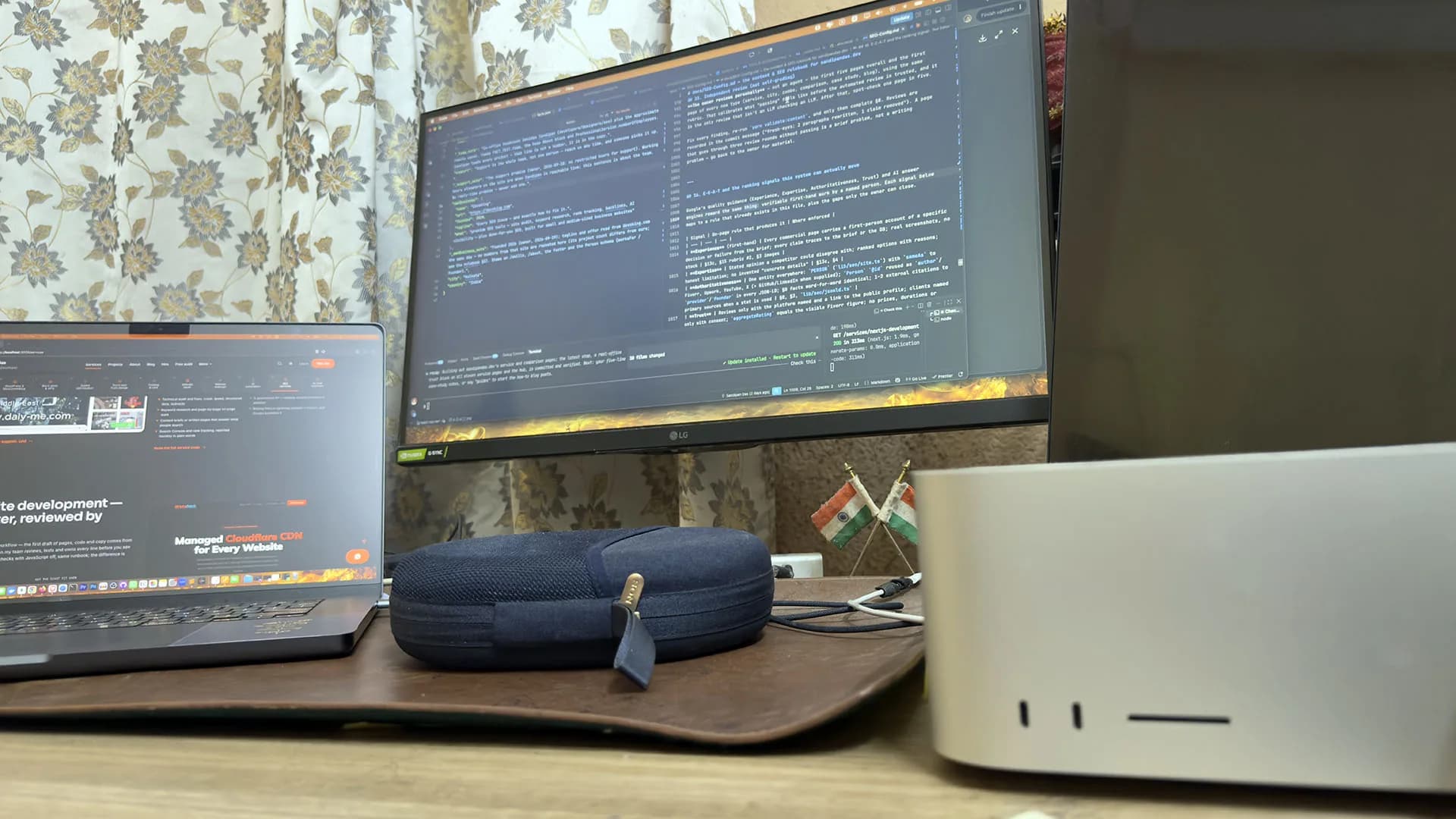
A real office, real people
Led by me, built with my team — in Kolkata, India.
The team: three developers, a designer and three SEO specialists in the Kolkata, India office, plus around six people working remotely. The models write the first draft; a developer on the team reviews it, tests it and owns every line.

Sandipan Das
You talk to me; I’m the one accountable for the work.
- Availability
- The team works on your schedule, in your time zone.
- Support
- Support is the whole team, not one person — reach us any time, and someone picks it up.
Pricing
Is a website built with AI cheaper?
The quote lists each page, each feature and each integration as a separate line, agreed before work starts. When you build a website with AI in the drafting, the drafting lines come out smaller. The review lines do not shrink.
So there is no single "AI discount" figure. The scope shows where the time goes.
The quote page explains how lines become a price, without any figures.
- Drafting lines: smaller
- Review lines: unchanged
- Design and launch lines: the same as any build
Next step
Start with rough notes and photos
You don't need finished copy. What you have now is enough to plan the page list, and the gaps get named on the call.
Is this the same as an AI website builder?
- No. My team starts from a written scope and your own material, and the AI models are one tool inside a normal WordPress or Next.js build. You get a launch call and a handover like any other site I make.
Will my visitors be able to tell AI was used?
- Not if the draft has been edited to sound like you. What gives a draft away is a sentence that doesn't match how you work, such as a service you stopped offering or a tone you'd never use. The read-through on staging looks for exactly those sentences.
Who owns the code when the site is finished?
- You do, the same as with any other build. The repository, the hosting and the keys are in your name, and the runbook shows how to change the site. No AI service is needed to run or edit it afterwards.
What if the AI makes a mistake?
- Mistakes get caught on staging, where each drafted claim is checked against the notes you sent. Anything you spot in your own click-through goes into the revision log and is fixed the same way.
Should my site be on WordPress or Next.js?
- Who edits the site after launch decides the stack. If you plan to change the pages yourself, I start from WordPress. If the site has logins, bookings or data behind it, Next.js suits it better. The models draft for either, and the checks stay the same.
Published · Updated